ERIF Sinterklaas Brand & Product Study 2026
By Bryel Kerkhoff-Parnell & Martijn Kerkmeijer
1 July 2026, 10 min read
On this commemoration and celebration of Keti Koti / Kadena Kibra, in the Netherlands, Suriname and across the Caribbean, we bring to you the results of our 11th study on Sinterklaas branding and merchandising, which continues to capture the social impact of anti-racist social justice movements through the evolution of the Zwarte Piet character. Last year marked the 10th publication of our annual study. This is the same year that Suriname celebrated 50 years of independence, and Den Haag (The Hague) finally unveiled its commemorative monument to the Dutch role in transatlantic slavery. Yet, 2025 also carried a more troubling development regarding the once-popular 2010 Sinterklaas family film Bennie Stout. The film’s director, Johan Nijenhuis, commented on the fact that in the years since 2010, streaming services would no longer carry a film containing blackface. Therefore, he was considering turning to AI-based technologies to doctor the imagery in such a way that the Zwarte Piets appear sooty instead of blacked up, as a less costly way to re-release the once-popular seasonal film. Setting aside the compellingly contentious nature of AI when it comes to racial imagery, what is also striking about Nijenhuis’ statement is the apparent lack of contrition over making a film with these depictions in the first place. Moreover, is the reduction of the performance and stereotyping of Zwarte Piet down to merely the face-paint, when in fact any racial mimicry depictions rely on so much more than just that.
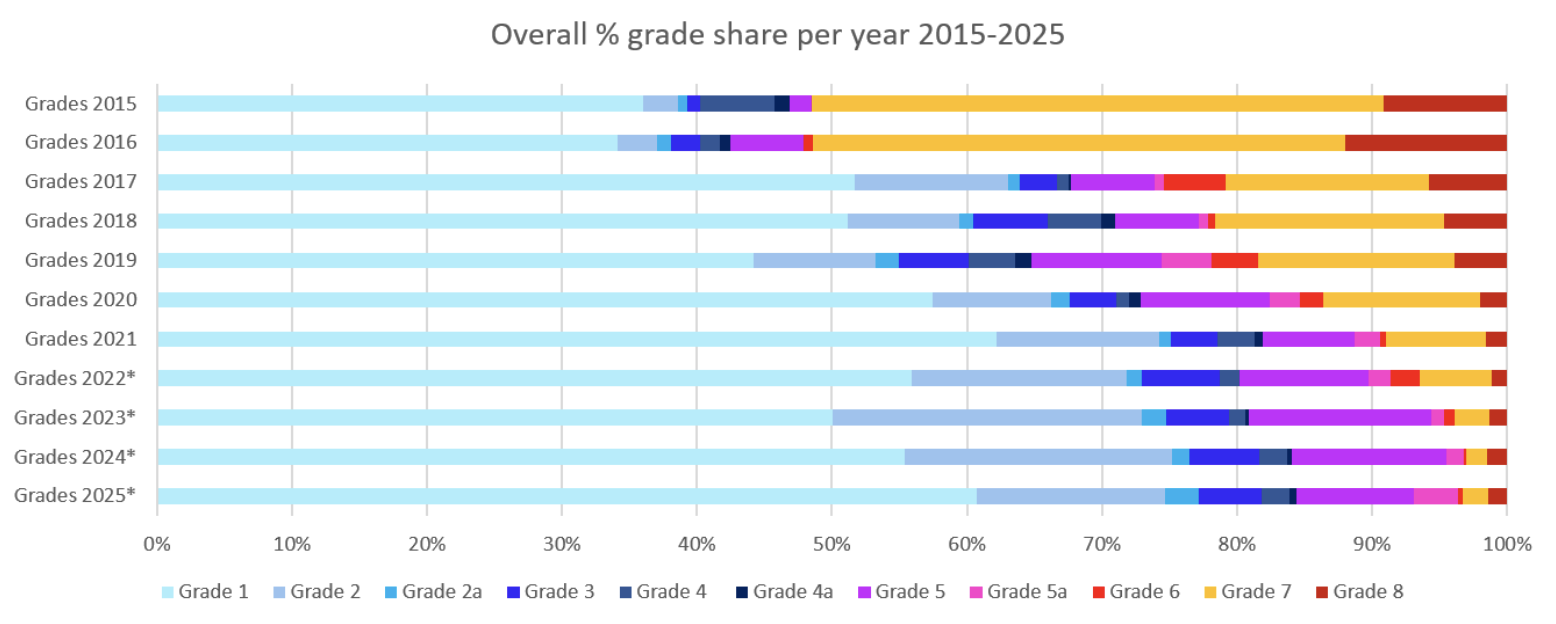
On the other hand, Nijenhuis demonstrates a strong awareness that his film could never be made in the same way today—especially after the nationally-broadcast and narrative-leading Sinterklaasjournaal phased out its use of blacking up in 2019. Indeed, as our study has consistently shown, the mainstream market around Sinterklaas has pushed out the most racist interpretations of the Zwarte Piet character, with less than 5% of the market share being made up of anti-Black, racist merchandise. Nonetheless, the use of the controversial sooty Piet or the “sneaky” silhouetted depictions continue to raise questions about the intentions of values of brands and marketers. We contend that brands and businesses, by and large, are playing their marketing of Sinterklaas safe, given the domestic as well as international attention and criticism from 2011 onwards, but also attempting not to completely alienate a predominantly white population. It is in this negotiation that we have witnessed play out over the past 11 years, Black consumers become merely an afterthought, which is perfectly encapsulated by Nijenhuis’ comments.
Over the past 18 months, we have presented our findings all over the world, from the 2025 RIM Forum in Cape Town, to conferences in Prague and Berlin on consumption and colonial advertising, respectively. We showcased our 10th report, which featured relatable accounts of blackface from the Netherlands, Spain and Switzerland, at Pakhuis de Zwijger in Amsterdam. In the same period, our 10 years of data were featured alongside other impactful testimonials as part of the Nederland Wordt Beter Neem Het Stokje Over expo. Lastly, this past February, we closed the loop by presenting our findings again for RIM, this time to open their new Global Dialogues series. In all of the presentations and encounters we have engaged in these past months, we have been asked if—given the results we have shared—there is still a need to collect this data. Nijenhuis’ intention to use AI to try and cover up his racism, reveals a broader societal fatigue with the topic of racism as well as a widespread desire to go back to normal. But normal for who? These are the sentiments, questions and concerns that continue to drive our research, where we will continue to monitor how the most popular festival in the Netherlands, het heerlijk avondje, evolves and shifts. Moreover, at a time when countries such as the Netherlands face mounting pressure to meaningfully atone for their roles in colonialism, enslavement and dehumanisation of Black people over generations and into the present-day, we will continue to ask: is the ongoing morphing we observe around Zwarte Piet out of genuine concern for the Black consumer, or is it to avoid the accusation of racism?
2025 Results
Grading System
- No Piet character visible on/as Sinterklaas-specific products, packaging or advertising.
- Silhouette/shadow of a Piet-like figure on Sinterklaas-specific products, packaging or advertising; 2a. Piets presented as (cartoon and/or stuffed) animals and/or other non-human creatures, on/as Sinterklaas-specific products, packaging or advertising.
- White Piet (either real person or cartoon) with no face-paint of any kind on/as Sinterklaas-specific products, packaging or advertising.
- Multiple Piets portrayed by or as having (cartoon or real) any racialized identity (incl. white!), with no face paint of any kind, on/as Sinterklaas-specific products, packaging or advertising; 4a. Women (and/or girl-gendered children), or men (or boy-gendered children) of colour (i.e., non-white) dressed up as Sint (real or cartoon). These depictions can be accompanied by Piets portrayed by/as having any racialized identity.
- White Piets (real or cartoon) with “sooty” faces on/as Sinterklaas-specific products, packaging or advertising; 5a. Non-white Piets (real or cartoon) with “sooty” faces on/as Sinterklaas-specific products, packaging or advertising.
- Multi-coloured (with the use of face-paint) Piets (real or cartoon) on/as Sinterklaas-specific products, packaging or advertising.
- Real or cartoon Piets (exclusively and explicitly) portrayed as having African features or by Black people, with a traditional Piet costume, with no white Piets presented. Only when analysing cartoons, includes caricature references.
- Real white people only (i.e., in photographs) wearing blackface to portray Zwarte Piet, with exaggerated stereotypical, racist features on/as Sinterklaas-specific products, packaging or advertising.
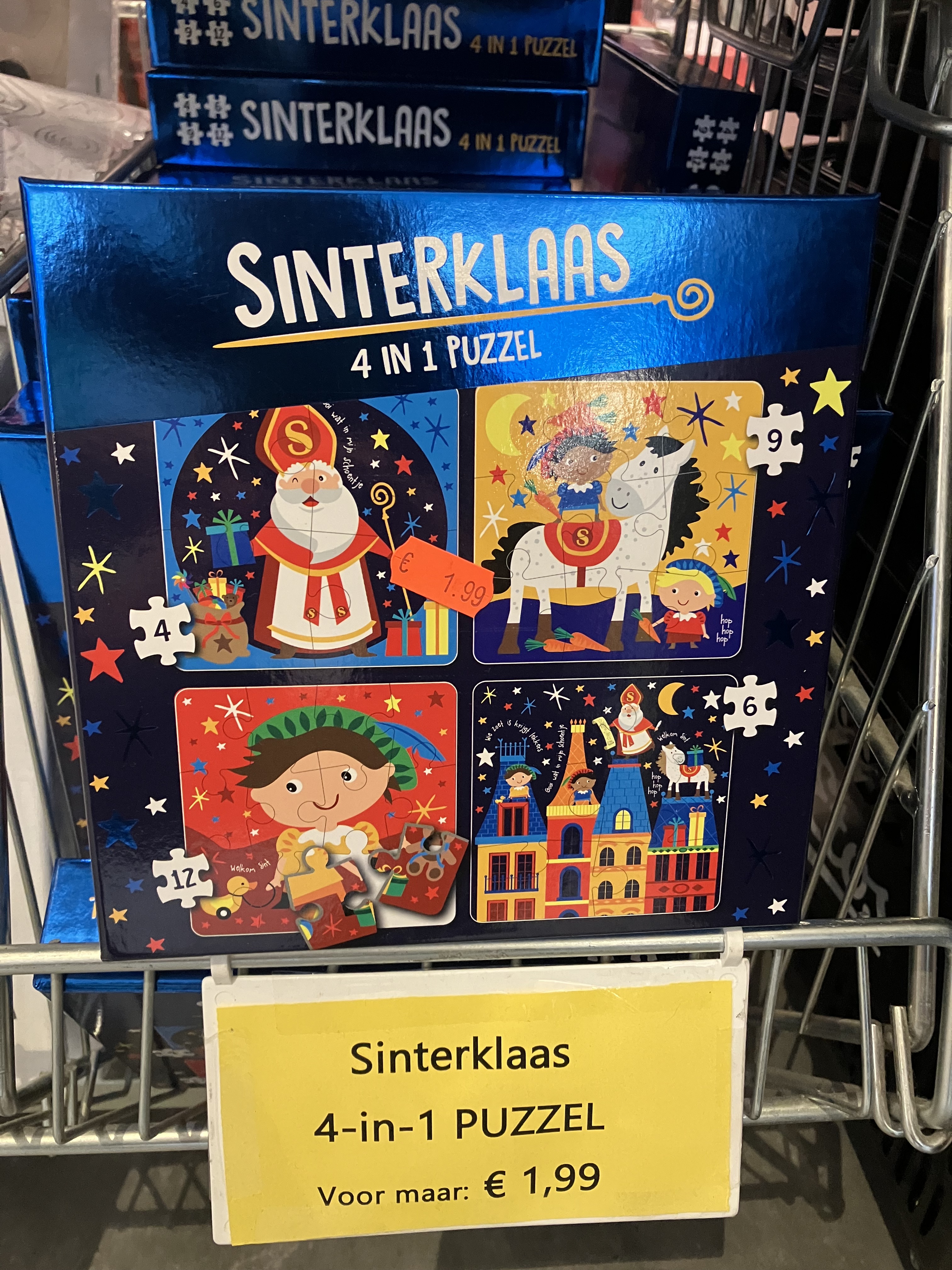
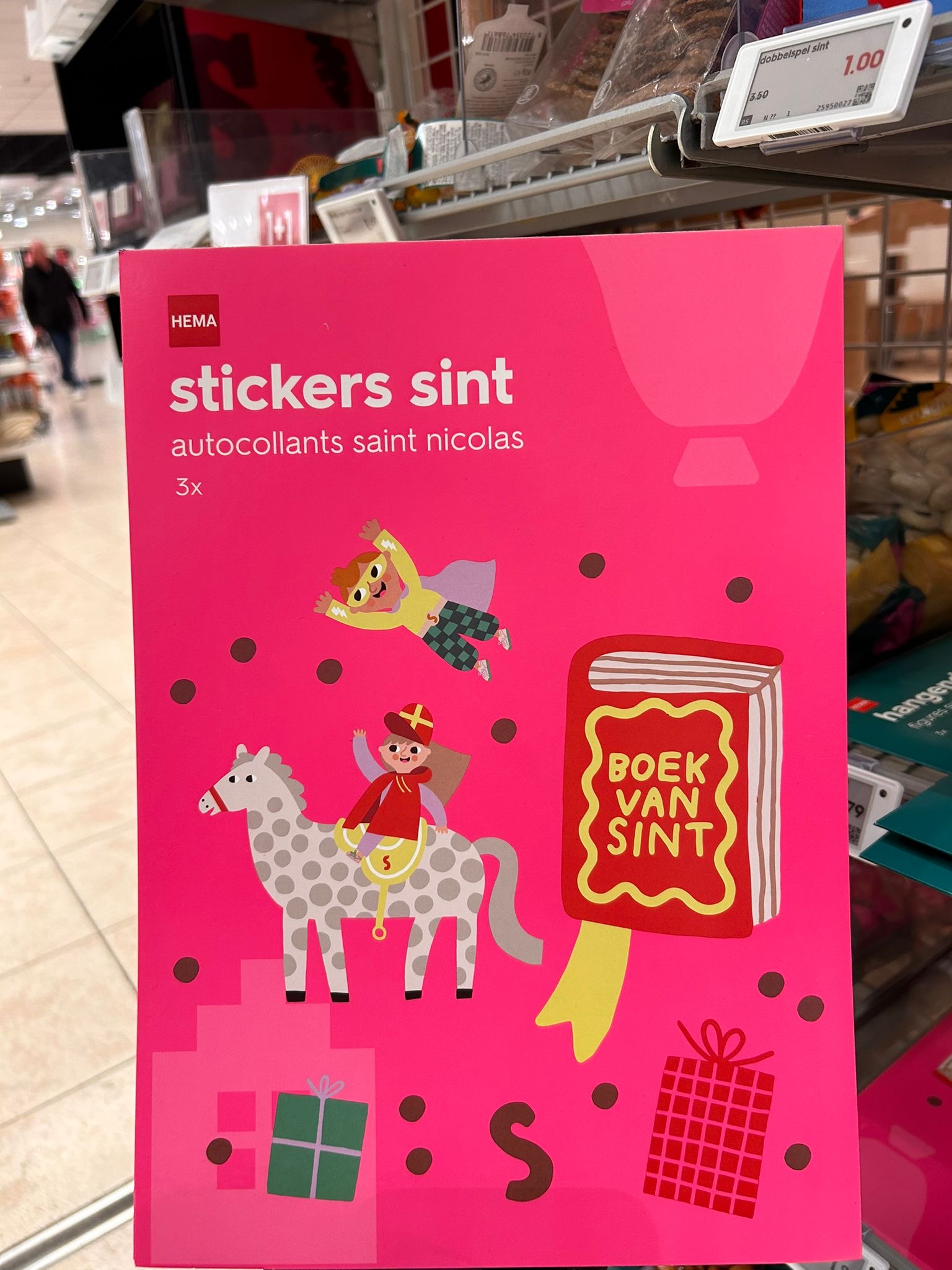
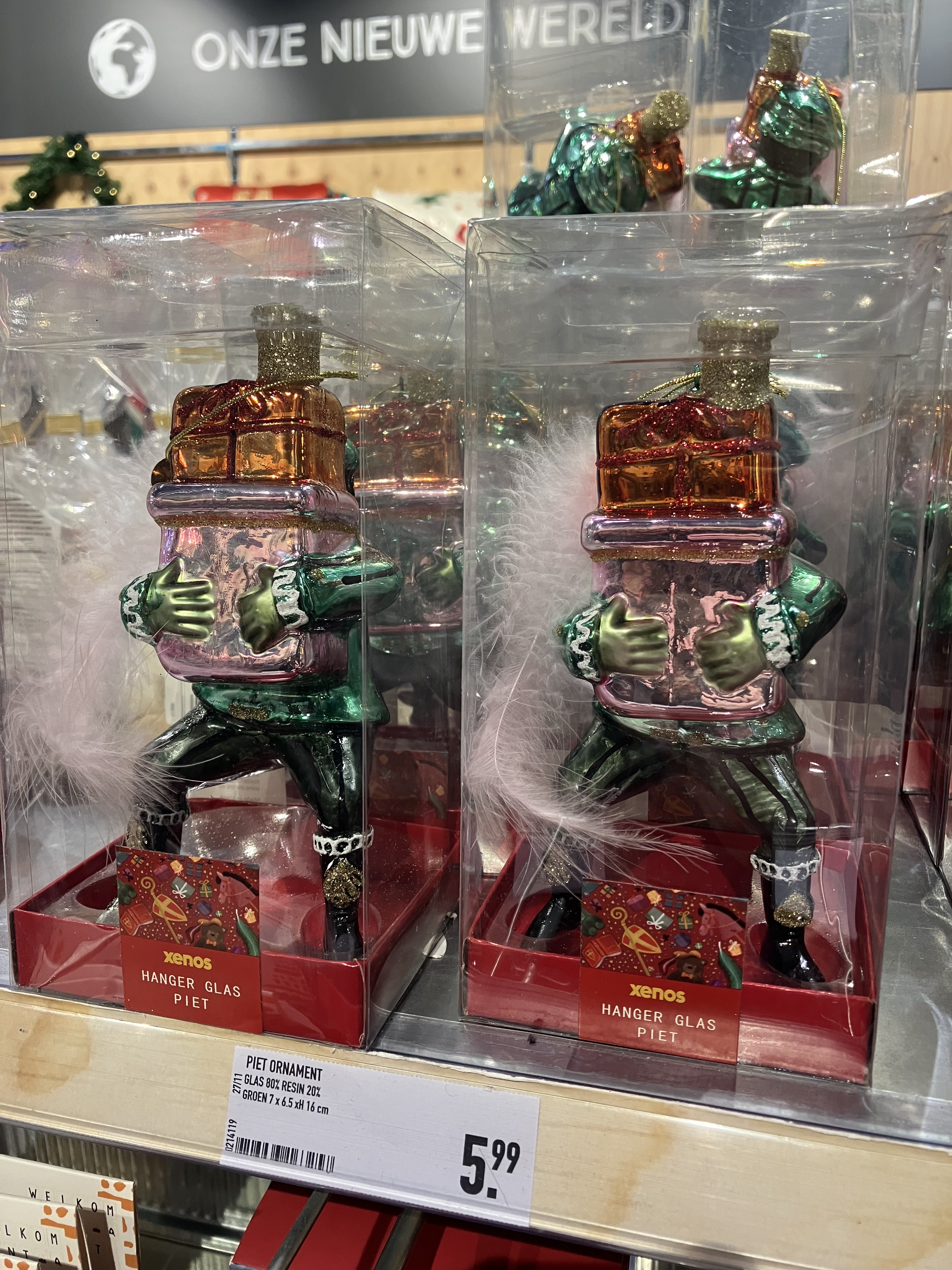
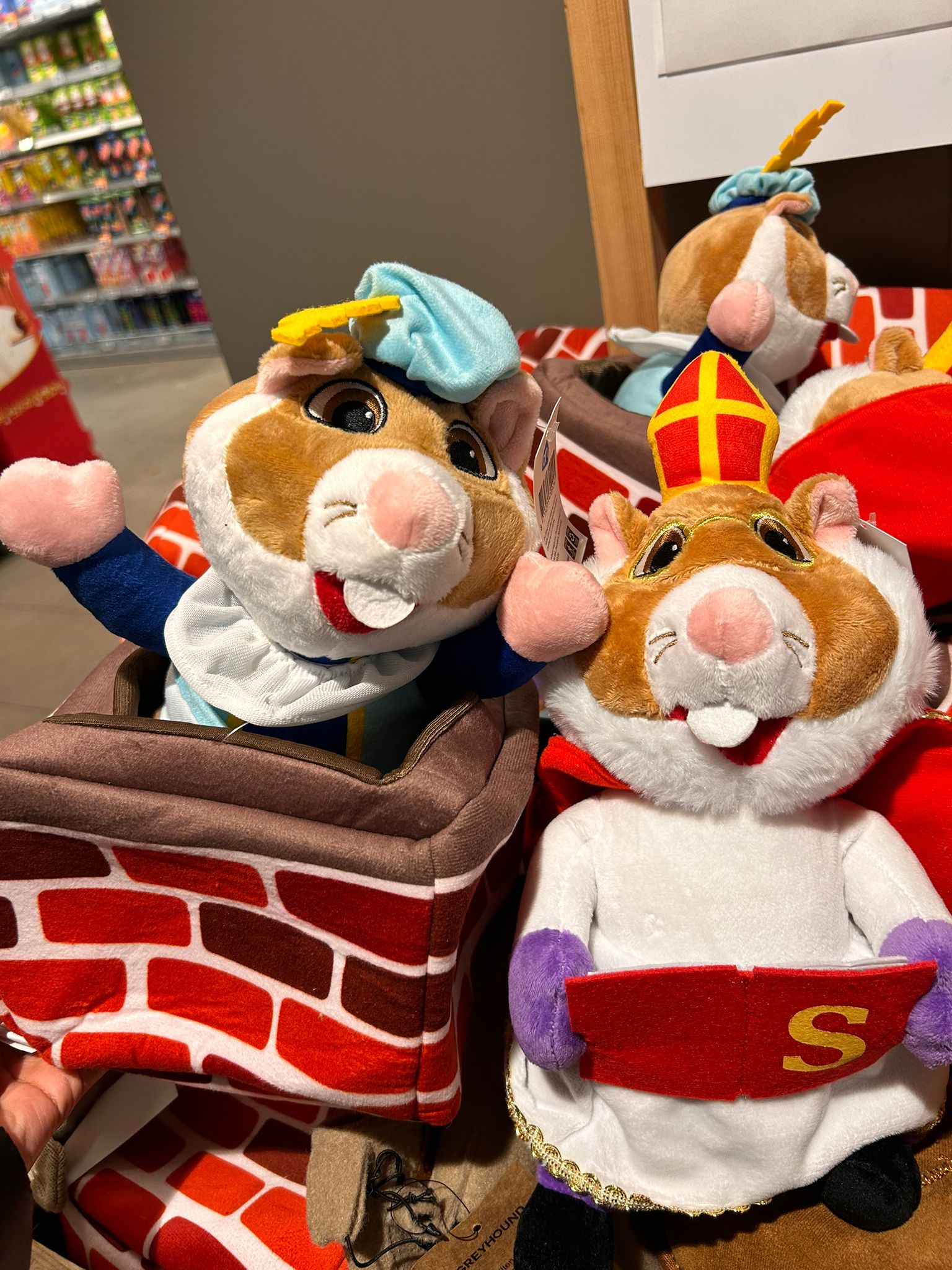
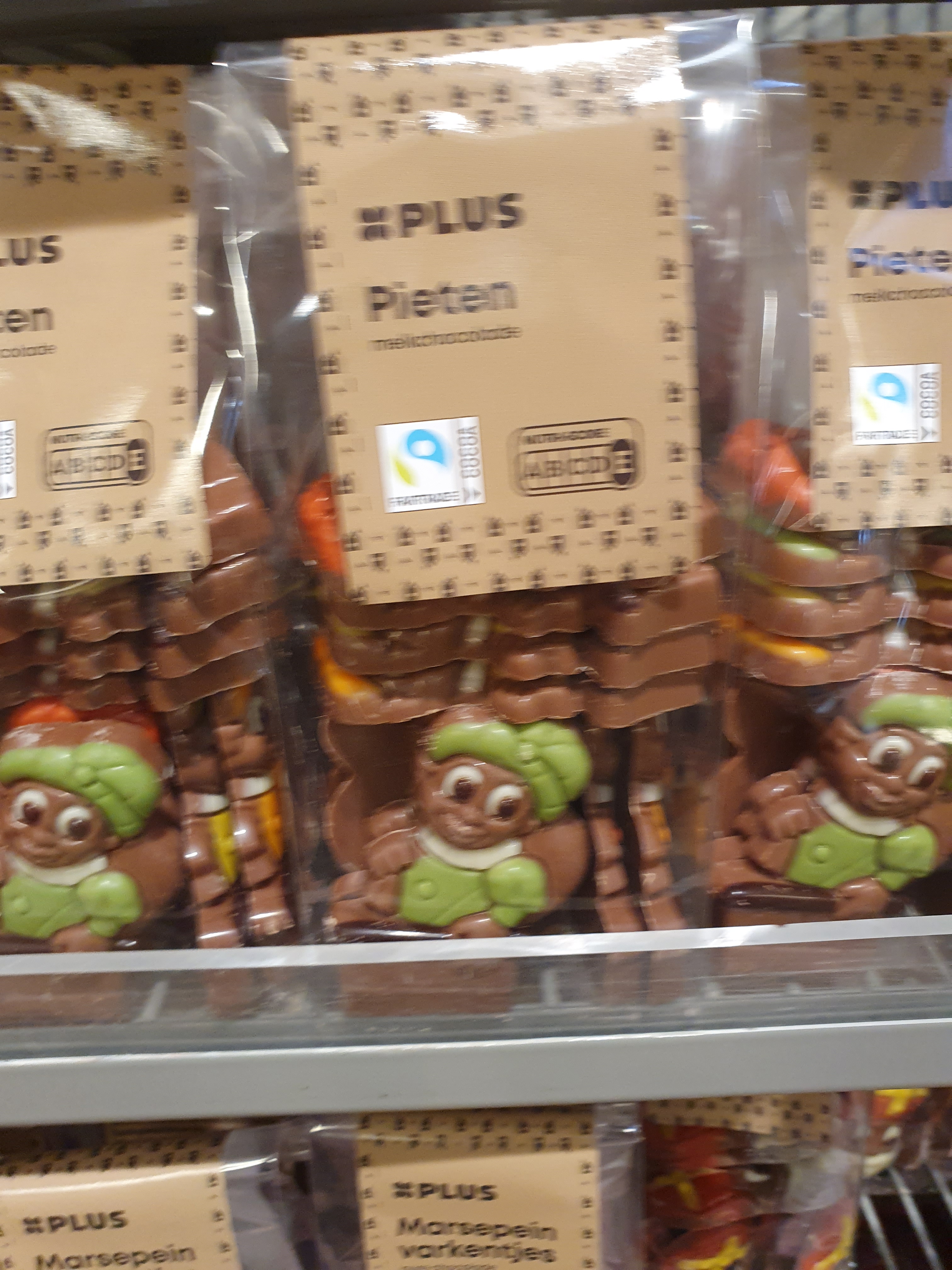
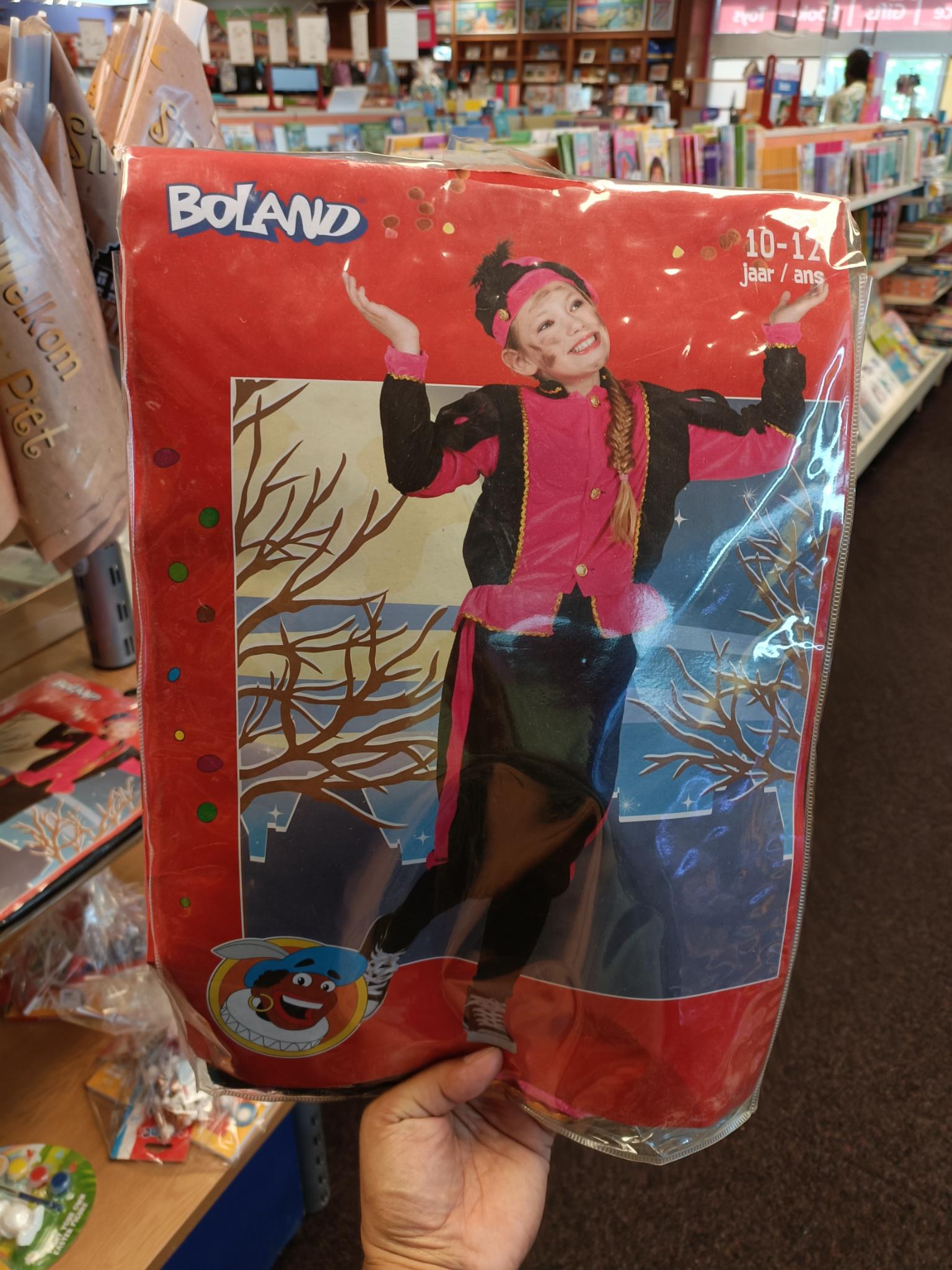
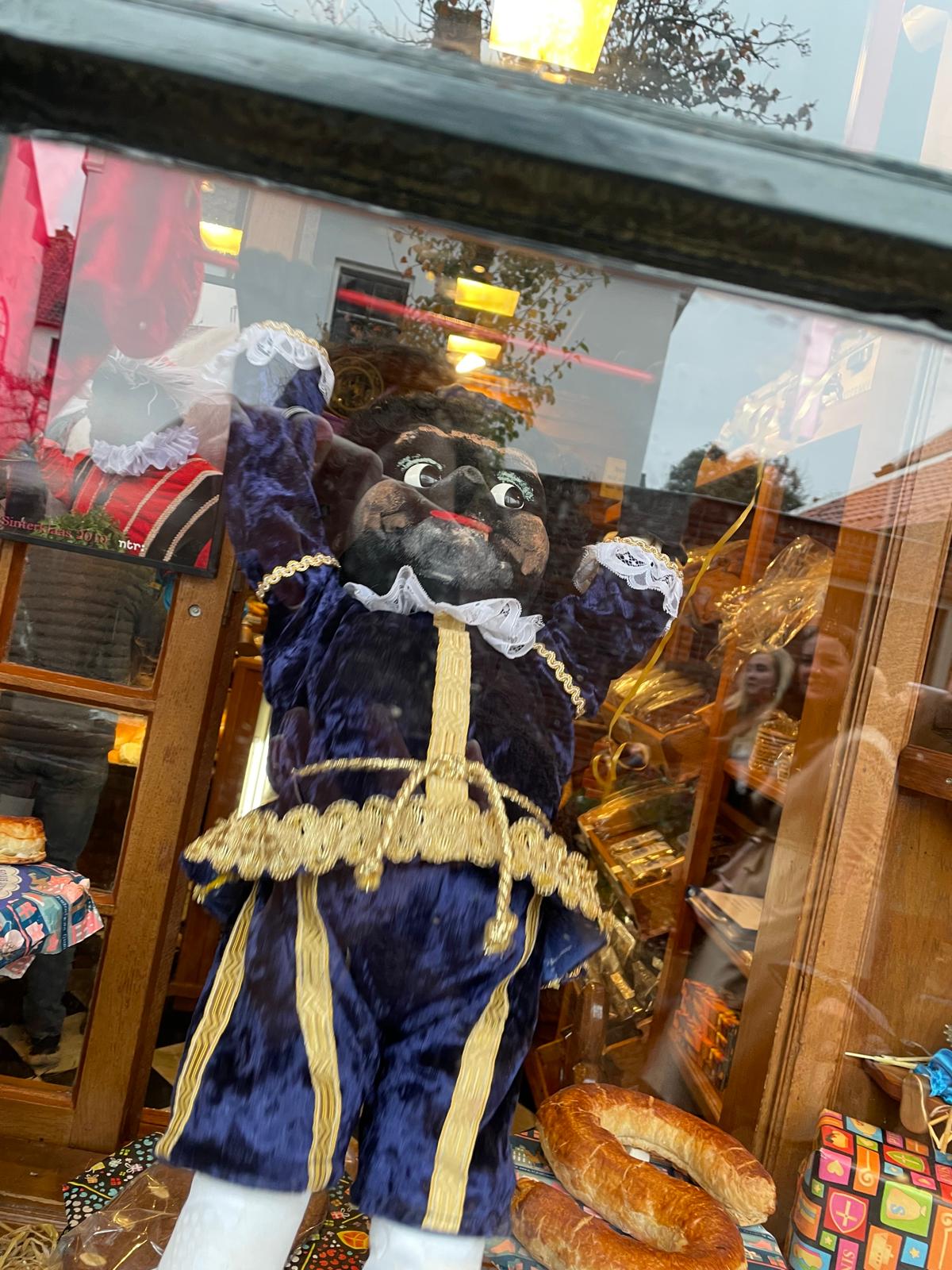
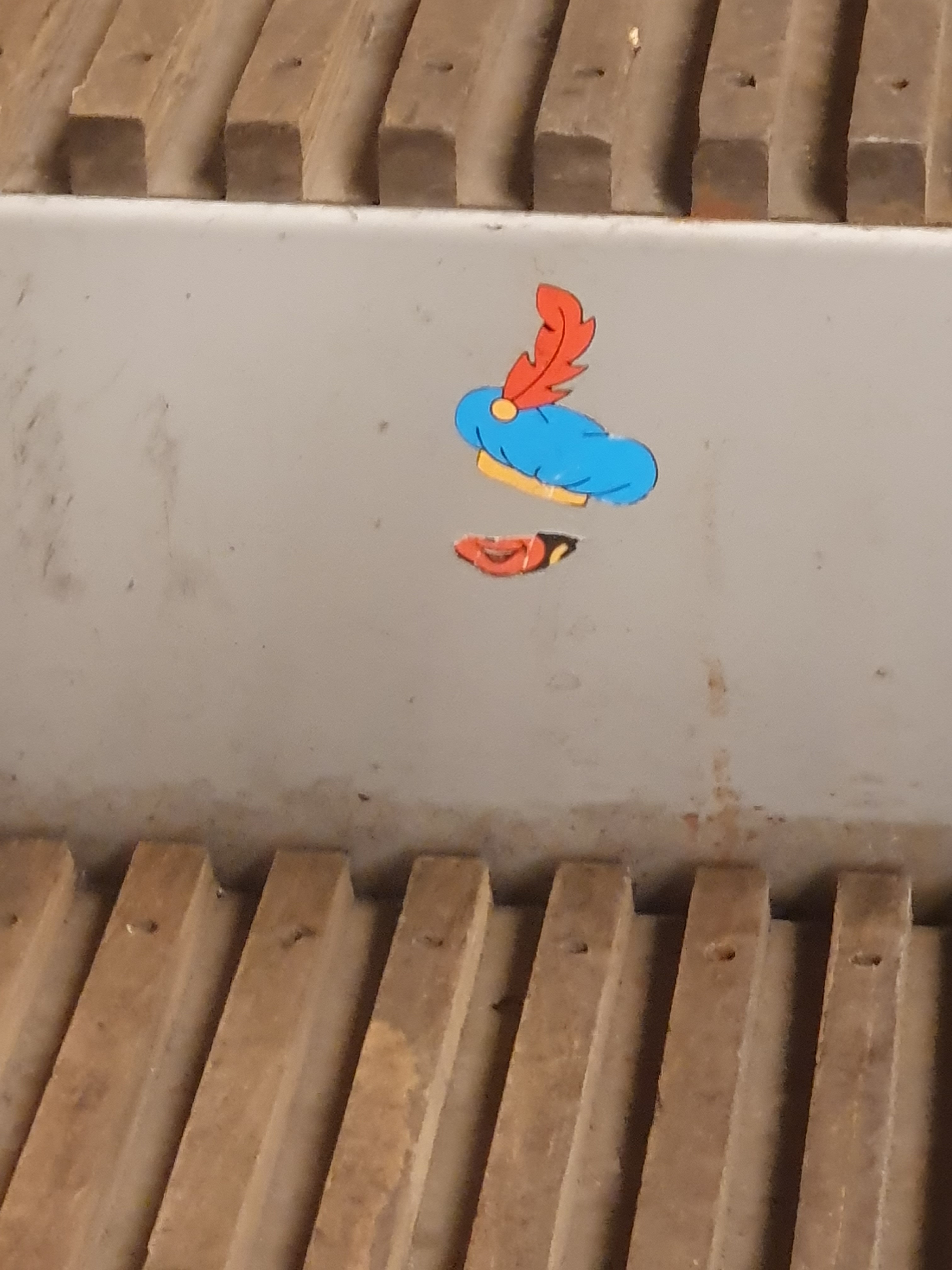
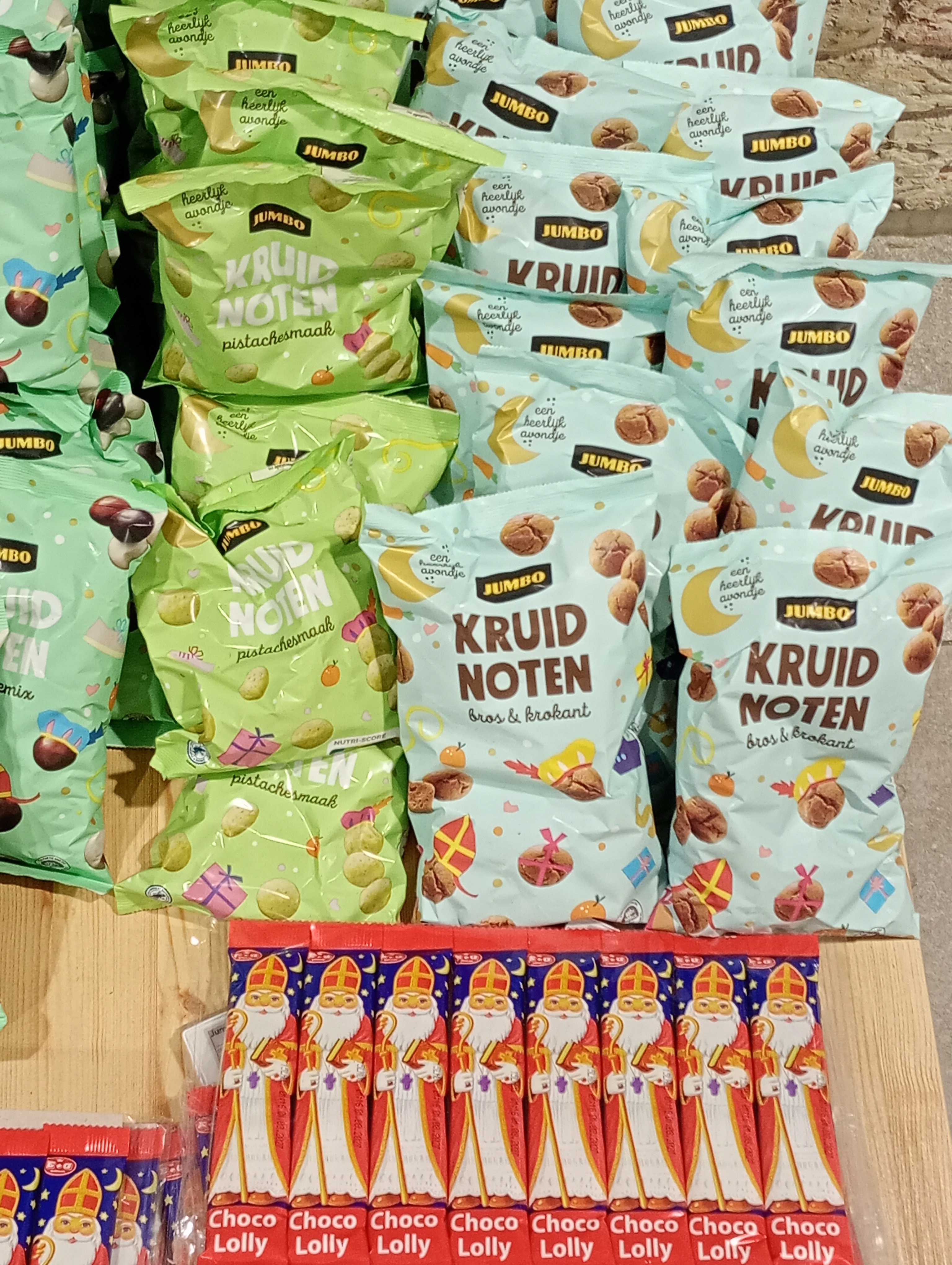
© 2026 ERIF. Left to right, top to bottom: Etos Sinterklaas puzzle, Den Haag; HEMA sticker book with “super” Piet, Utrecht; XENOS “sneaky” Piet decorations, Den Haag; Albert Heijn hamster mascot as Sint and Piet, Utrecht; PLUS chocolate Piet figurines, Rotterdam; Piet costume with grade 7 imagery, Curaçao; Zwarte Piet doll, Harderwijk; Zwarte Piet sticker, Rotterdam; Jumbo Sinterklaas display, Utrecht.
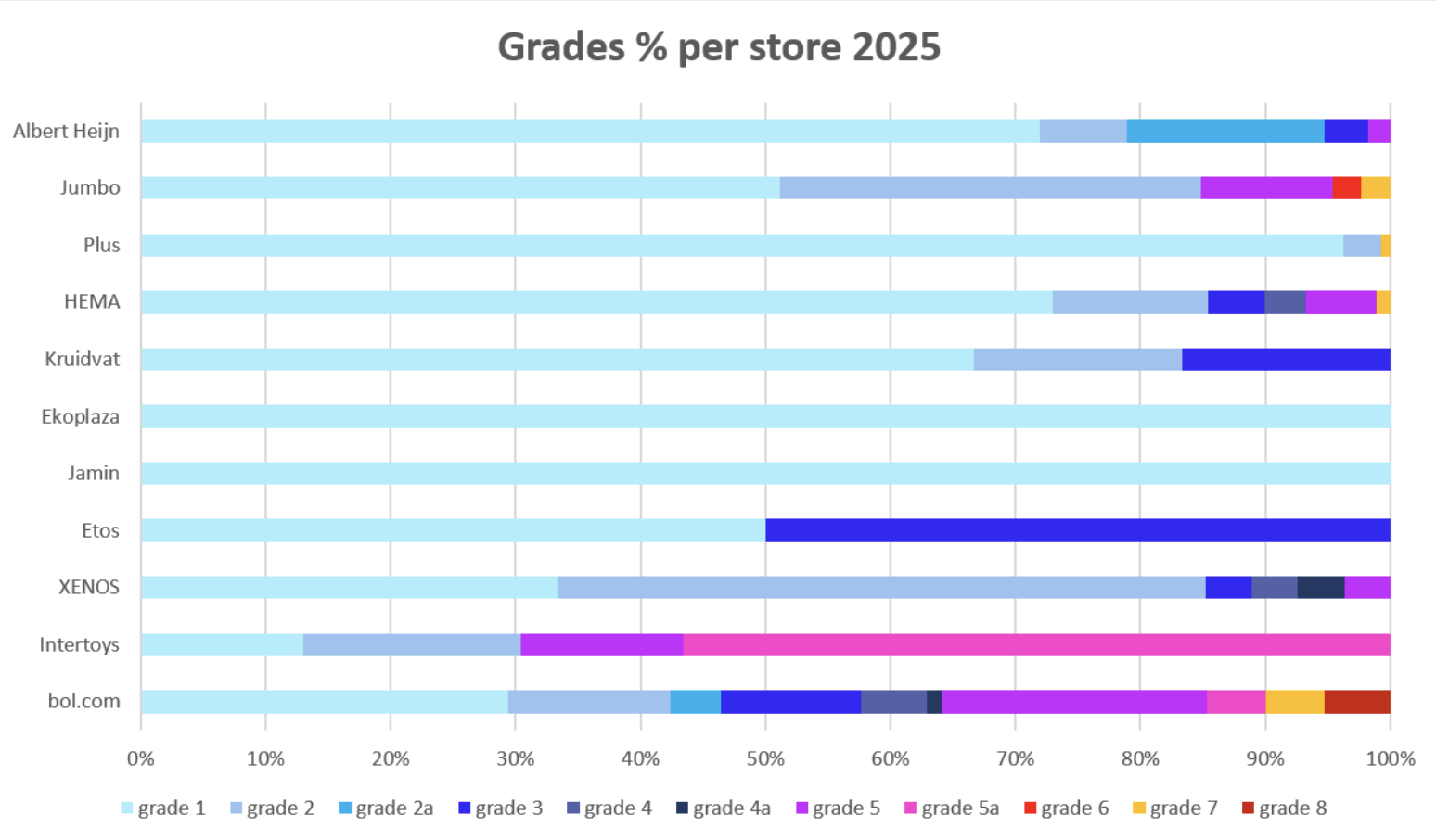
Our latest study took place between October and December 2025 via qualitative data collection and analysis in eight towns and cities in the Netherlands, Germany and Curaçao, as well as quantitative data collection and analysis of the webshops of 10 highstreet stores, as well as bol.com. Products in stores such as Kruidvat, Ekoplaza, Jamin and Etos showed little variation and were graded as 1 online, although in-store observations revealed more variation in terms of grades as well as product type.
In past studies, we noted how department store HEMA seemed to be leading the charge and setting the trend with the rebranding around the sooty or roetveeg Piet narrative, inherited from the Sinterklaasjournaal. Our 2025 data shows yet another HEMA rebrand, this time in the direction of a superhero motif, contributing to a significant decline in grade 5 products. On the other hand, at Intertoys grade 5a is gaining ground among store displays, which will shape how the store’s key demographic—i.e., children—see the Piet character. The super Piet interpretation has also been used by certain Sinterklaas film series in the past, so in time it could become normalised.
Albert Heijn has always been something of a mixed bag and continues to display mainly grade 1 products. At the same time, quite some grade 2a imagery can be observed in store, owing to the supermarket’s hamster mascot. Meanwhile, at XENOS, grade 2 “sneaky Piet” persists with the largest share, although grades 1 and 3 remain relevant at this store. Our other two major supermarkets, Jumbo and PLUS, were where we found grade 7 products: taaitaai at Jumbo and chocolate Piet figurines at PLUS. While PLUS displays mostly grade 1 products (aside from those figurines, which were also observed in store in Rotterdam), Jumbo’s characteristically chaotic assortment remains, with a steady mix of grades 1, 2, 5 and 6.
At this stage, grade 8 products (which feature an image of a real-life white person in blackface) make up just over 1% of the total share of our analysis, and this year could only be found via the digital marketplace bol.com, namely for DVD and CD covers. The other significant bol.com grading is for grade 5 (21%), which is spread out across categories. The other usual grade 8 culprit, Blokker, suffered a bankruptcy last year (as noted in our 2025 report), and has no online presence anymore and therefore has not returned in this year’s research. When combined across all stores, grade one takes the biggest single share, at over 60%, up from the previous two years, but still not as high as in 2021, when the grade 1 share reached its peak. This has been to the detriment of the grade 2 (sneaky Piet) share, although this grade still has the second largest share by far.
Despite the minimal presence of grades 7 and 8 in our 2025 online data collection, there continue to be literal traces of Zwarte Piet imagery and merchandise indicating not only a demand, but also a steady supply of the most racist Sinterklaas brands and products. For one thing, similar to the CDs and DVDs we located on bol.com, it is still possible to purchase (retro) Zwarte Piet Playmobil sets on eBay, while we know Vinted removes such items. Zwarte Piet was also spotted on an otherwise grade 3 Piet costume packaging in Curaçao, in a delicatessen shop window in Harderwijk and partly scratched away on an escalator in the Rotterdam Maastunnel.
While Halloween and Christmas displays take up increasing shop floor space during the same shopping period as Sinterklaas, our in-store fieldworkers continued to document familiar, sprawling shelves of chocolate letters, kruidnoten packets, shoe shelves and other miscellaneous merchandise. This illustrates that despite the seasonal competition, Sinterklaas is holding its dominant cultural as well as commercial position. In 2027, we will return with a full report, capturing these ongoing developments at 12 years and considering with renewed data whether sooty and sneaky Piet really will need to make way for super Piet.
With thanks to our research team!
Raul Balai, Rosie Carlton-Willis, Xavier Donker, Kahya Engler, Toon Kerkhoff, Faye Stubbs, Cat van Reenen, Maddie Swainhart & Alice West.
 erifonline.org